Tunnel house or no tunnel house
As we move into spring, the soil starts awakening from its slumber and we get excited for the coming growing season. Now, we can start thinking about what gets planted in our veggie gardens this year. What glorious crops do you have in mind?
Living in the Southern Lakes, a subalpine Mediterranean blur of weather that can give us a frost in ‘any’ month of the year, means we have to think more carefully about what we plant and where we plant it.
So in this few hundred words or so we’re going to talk about tunnel/glass house or no glass/ tunnel house. That is the question.
We are also including ‘corflute’ grow houses in this mix.
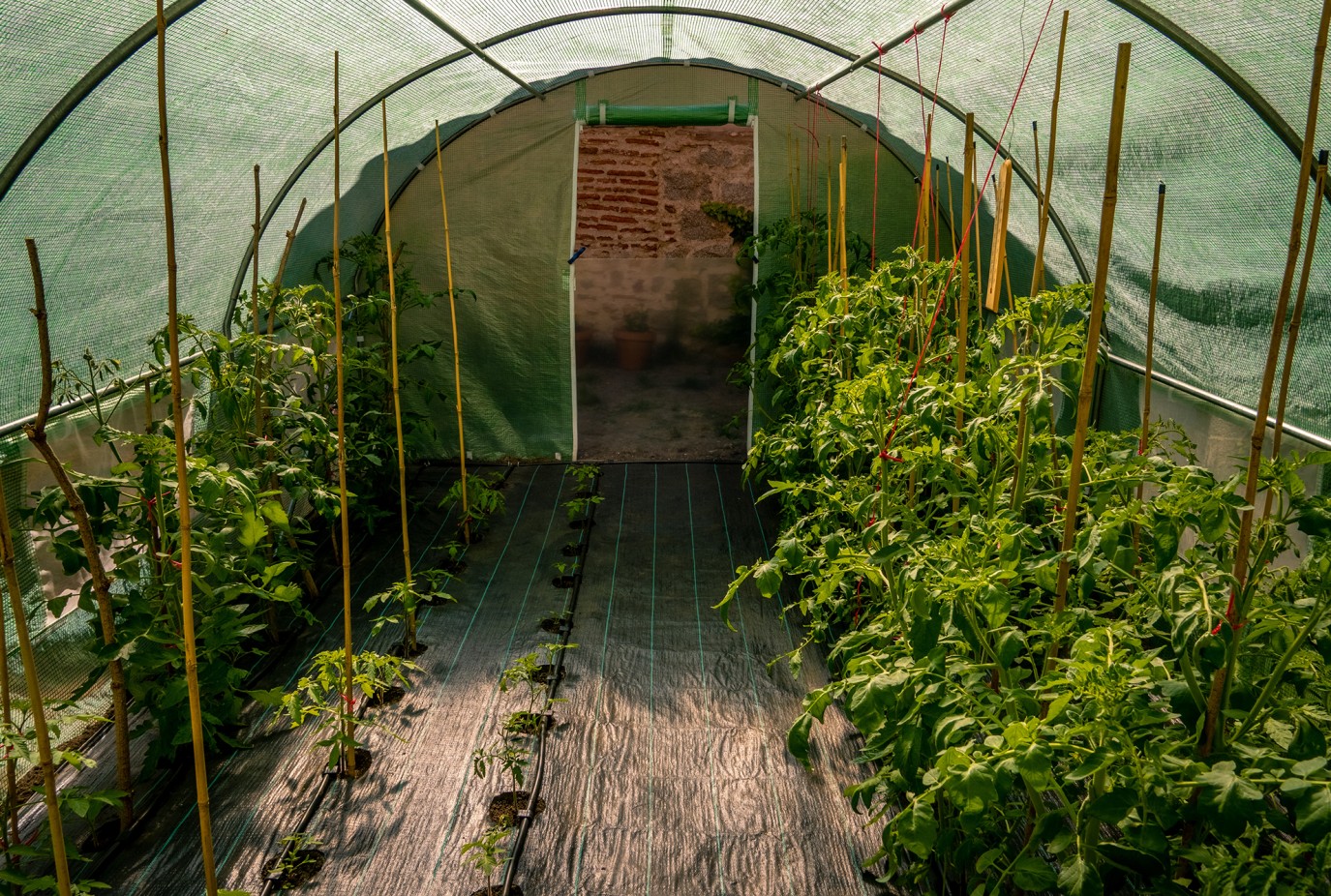
We use these buildings to even out our daily highs and lows – they make the highs higher and lows higher, protecting our plants against the low temperatures is the most important, be it unseasonal frosts or our cool spring summer autumn nights. Traditionally, they’re a space we grow warm-loving crops like tomatoes, cucumbers, eggplants, capsicums, chillies, and maybe a sneaky lemon tree in the corner, or in my case a sneaky pomegranate (one fruit in 10 years it’s definitely not carrying its weight to real estate).
It’s not just about those summer crops, we can grow amazing crops in the spring, autumn and winter seasons; leafy greens, spring onions, broccoli, kale, radishes, spinach, early potatoes you name it and there can be space in these structures to grow veggies faster beating the cold seasonal doldrums we’re susceptible to.
We really are adding resilience to our food growing arsenal. Sure, we’re not levelling up to Victorian garden levels of food growing infrastructure. With a team of workers growing us grapefruits on hot compost beds. I mean that would be fun.
We do need some garden infrastructure to help us grow here.
So, I believe all gardeners should aspire for some kind of tunnel house/glass house type of structure to grow food in. Once built they can last decades. My tunnel house is well over 20 years old and I’m looking to replace the plastic cover this year for the first time. It would have lasted longer if not for small kids and a knife. In that period it has grown so much bountiful food.
Our climate is harsh, with wild swings in daily temperatures plants don’t know if they’re coming or going. It’s the swings in temperature that lead to plants bolting to seed early or getting a case of the chills. I’ve had tomatoes be hit by the chilly weather, they don’t die they just stop growing. These structures bring amazing long-lasting heat into the beds. Plants grow faster when there’s good even heat. They allow us to grow exotic tomatoes, when you put a store-bought tomato next to a home-grown heritage one, there’s an easy winner.
There’s just one problem with my dream of a tunnel/glass house in every backyard. The barriers to entry. Owning a piece of dirt and The Mulah! These tunnel houses/glass houses are an expensive outlay. New sections are getting smaller and smaller too.
Allotments and community gardens are one pathway to food growing when you’re lacking options, check out what’s available in your local area.
We can make some amazing glass houses out of upcycling windows and doors, there’s plenty in the district. On my own gardening wish list exists a bespoke double glazed glass house all with upcycled windows. One day.
So what to do with no tunnel/glass house. Can we still grow these warm loving vegetables? The answer is yes. We just have to be a little bit clever about it.
Option 1:
We can grow these vegetables outside in spots that have amazing microclimates. Look for spots that are north and west facing. We need thermal mass in the form of concrete and rock walls. The spot needs to be out of the wind. We will also plant a little later than we would in a tunnel house. Depending on the kind of spring we’re having, the beginning of November is a good time. It’s starting to warm up. We will need to use frost cloth to cover our plants on those cooler nights for at least the first month, possibly two.
Option 2:
We use some clever tools like cold frames and hoops to imitate tunnel/glass house conditions.
A cold frame is a great way of starting these vegetables earlier. And then as they outgrow the space they’re open to the elements. I remember my grandparents growing courgettes like this in a basic cold frame with an upcycled window.
Using hoops like the Kerilea 1m x 1m hoop with a tunnel house plastic cover. (You can go bigger with a 1.5m x 1.5m hoop. Needs support at the ends.)
Really the hoops are to get you through November and December to the heat of growing in January and February. Where your plants outgrow their protective covers.
You can also use these tools to grow leafy greens and larger cabbages caulks, etc, in spring and autumn, and even winter.
So yes, it is possible to grow without tunnel/glass but it would be nice to have one eventually.
Happy Gardening and Composting.
And welcome to all new cult members.