Experts warn against pushing on amid multiple rescues
Experienced local rescuers are warning young climbers against “getting sucked in by summit fever’ amid calls from Police for extreme caution in the backcountry after two more major alpine rescues near Wānaka in a week.
Specialist search and rescue volunteers and Police say in both cases those needing rescued were extremely lucky and they’re calling for more informed decision making, the necessary experience and a solid understanding of current weather and avalanche conditions before venturing into the mountains.
Some rescuers say people sometimes get sucked into summit fever and underestimate the time to get up the peak and back down safely.
Wakatipu Alpine Cliff Rescue Team coordinator Russ Tilsley says in a number of rescues recently, despite having some experience, people haven’t been allowing sufficient daylight hours to get back before darkness and extremely cold overnight temperatures set in.
“They’re not allowing the time to get up and down and arriving back early the following morning.”
He says in the miraculous survival of a climber who fell up to 300m off a steep snowy ledge several weeks ago the two climbers – believed to be an Australian and Cantabrian, had made the wrong decision to push on knowing they’d run out of daylight on their descent.
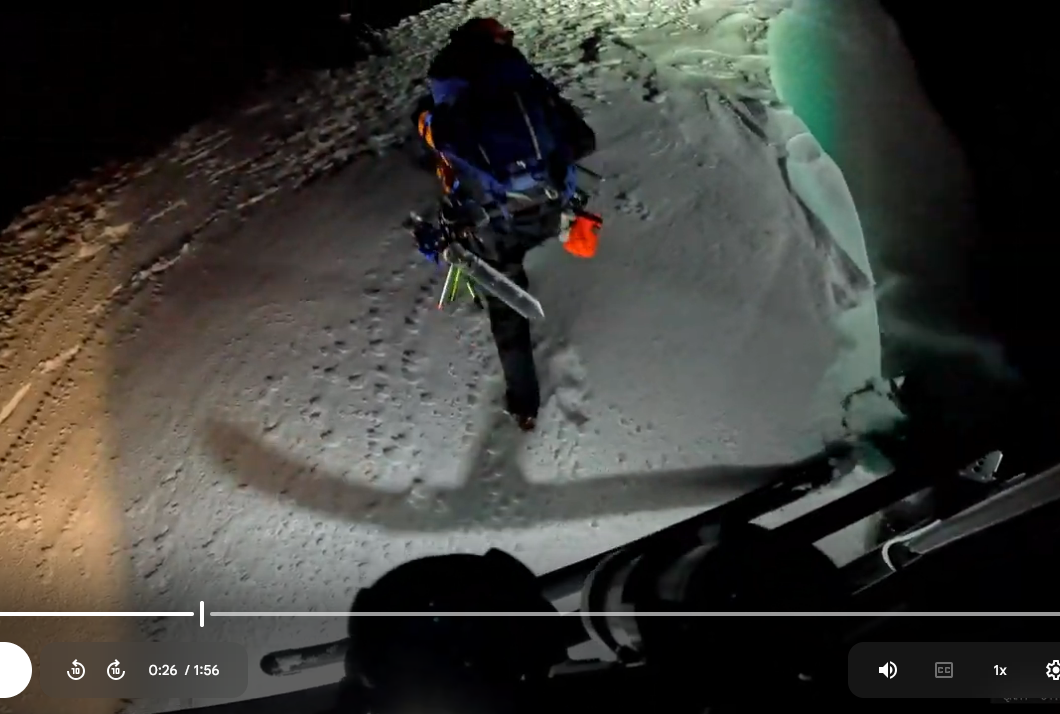
Wakatipu team members were part of a large, coordinated rescue for those two on Aspiring, and also for an experienced local couple who’d become bluffed on a near vertical ice face at night after taking a wrong route on their descent early last month.
A Wakatipu Cliff Rescue volunteer was up Mount Aspiring on a recreational climb just prior to the first rescue and had made the decision to turn back to the hut knowing it was too late in the day. The couple that ended up being rescued had carried on, Tilsley says.
The team was also on standby to help Wānaka’s Alpine Cliff Rescue Team who flew in with skilled pilots, ski patrollers and Police after two snowboarders ventured beyond the Treble Cone boundaries in heavy snow, strong winds and near-zero visibility on Thursday, 30 July.
Wānaka Sergeant Darren Cranfield says that was a complex search requiring extensive local expertise, the Aspiring Helicopters pilot flying in very difficult conditions. “It was only through the pilot’s extensive local knowledge, experience, and exceptional flying skills that search teams could be safely deployed into the alpine environment,” Cranfield says. The snowboarders, lost for six hours, were found only an hour before nightfall. “Had they not been found before darkness, the outcome could have been significantly more serious.”
That was the second SAR operation coordinated by Wānaka Police in a week and Cranfield says it serves as “another timely reminder that venturing beyond ski area boundaries into the backcountry should never be taken lightly”.
Tilsley says thankfully the two boarders were found: “Those kids were pretty lucky”.
Like the two men in their 30s in the accident on Mount Aspiring, he says they’d “totally underestimated” what they were heading into.
“Experience means being able to make the right decision and come to a conclusion that, yeah, I can make it to the top of the peak but the consequences of that will be that I will be coming down after dark,” he says. “By then people are cold, tired and hungry and that’s when they make mistakes. Do your due diligence,” Tilsley says. “One day the mountain may be attainable and one day it won’t depending on weather and snow conditions, which can vary greatly.”