Battling the big ones – Queenstown firefighter returns
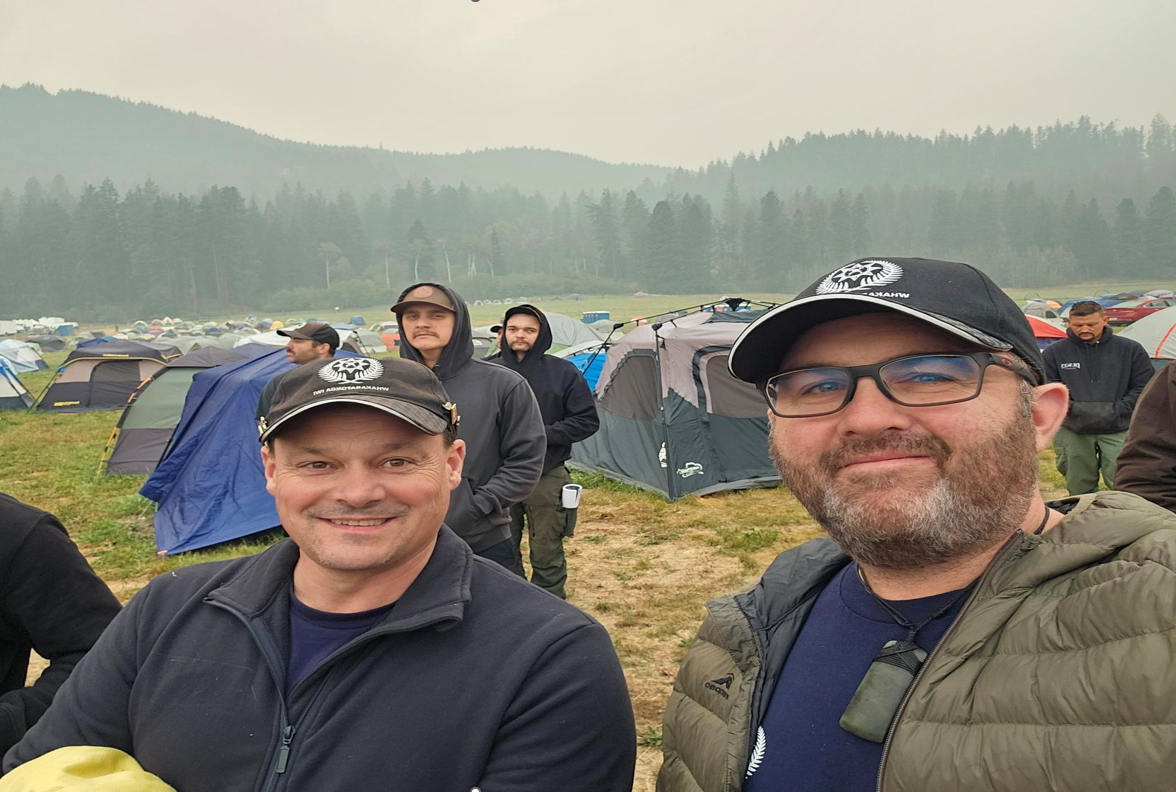
A Queenstown firefighting legend has recently returned from the US where he had his work cut out for him helping manage and coordinate four different helicopter bases – two in Oregon and two in Washington, in the massive battles there against wildfires.
It wasn’t Fenz Otago assistant district commander Bobby Lamont’s first time volunteering to help in the battle against big fires overseas, but this time the veteran of local firefighting, who’s clocked 26 years here as a volunteer, brought valuable helicopter experience from Queenstown.
Part of an initial five-strong Kiwi contingent and 69 Australians sent to give American firefighters some reprieve in August, Lamont was overseeing logistics on the ground and directing multiple aircraft and helicopters in the air at one time, posted there for six weeks. “We’d dispatch them from our base giving them critical coordinates,” he says. “Sometimes our air attack supervisor would be in the air at 8000ft (2438.4m) flying around coordinating the aircraft movements safely. At my last base I worked in Washington we had 10 helicopters assigned to one incident, heavier aircraft like massive three-engined Chinooks that can lift 5-tonne of water, and Black Hawkes.”
The helicopter base teams are responsible for managing who goes up and what their hours are with strict flying hour limits. “If they go over that limit in a 24-hour period they have to be stood down. It can be quite a juggling act,” he says.
“The smoke was a real problem.” Lamont says communication was vital and the smoke at times was horrendous. During one hair-raising situation the pilot they were directing lost communications. They went out after Bobby and the team had a request to send that aircraft to a particular part of a massive fire. “We started losing contact and he was trying to talk to the crews on the ground and struggling to see where they were in the thick smoke. That wasn’t a nice feeling,” Lamont says. “He did the right thing and pulled out.”
In Oregon he and the team were juggling four fires out of one base. “Everyone was maxing out. They’re flying between 6, 7, and 8 hours.”
While some fires are deliberately lit, the fires where Lamont’s bases were, were all started by dry lightning. “That was really scary. About 50% of the fires in the US and North America start that way,” he says. “A rolling storm came through with thunder, heaps of wind and no rain and masses of lightning. We had 150 strikes over three hours. That started about another 22 small fire strikes. The next day it poured with rain and they had flash flooding.”
Initial attack crews are constantly on standby, including huge numbers of personnel, mostly firefighters. “We had 1600 in our Little Giant fire area in Washington, mostly firefighters, plus incident management teams and aviation crews.” Smokejumpers were also assigned to their base there. “The mobilisation of resources there is very impressive,” Lamont says.
Five other firefighters from Otago and Southland worked at the base with Lamont, including Dunstan Volunteer Fire Brigade deputy Tony Smith.
“It was an amazing experience, and I was very privileged to go and help,” Lamont says.