Issue #899
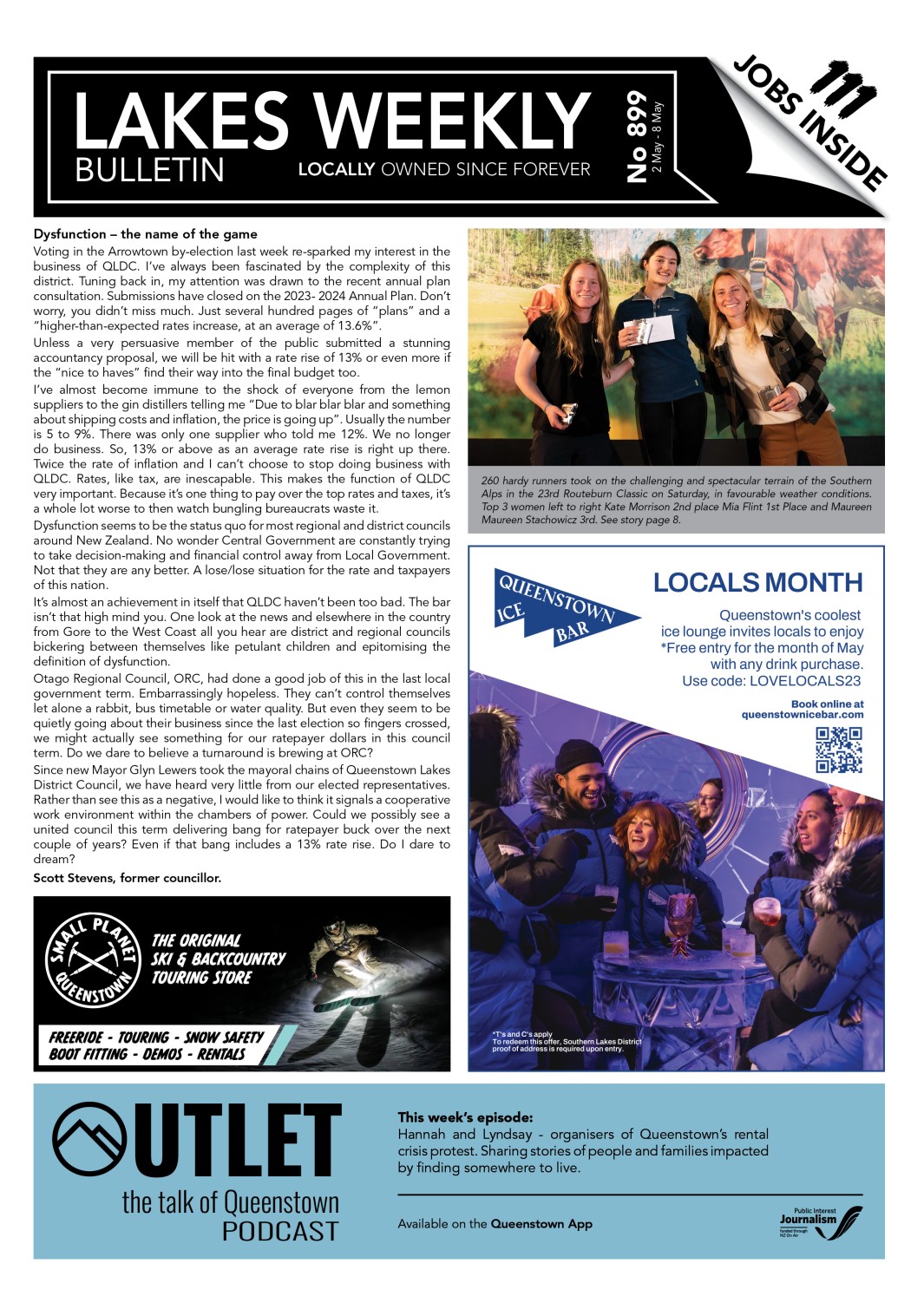
Dysfunction – the name of the game
by Scott Stevens, former councillor
Voting in the Arrowtown by-election last week re-sparked my interest in the business of QLDC. I’ve always been fascinated by the complexity of this district. Tuning back in, my attention was drawn to the recent annual plan consultation. Submissions have closed on the 2023- 2024 Annual Plan. Don’t worry, you didn’t miss much. Just several hundred pages of “plans” and a “higher-than-expected rates increase, at an average of 13.6%”.
Unless a very persuasive member of the public submitted a stunning accountancy proposal, we will be hit with a rate rise of 13% or even more if the “nice to haves” find their way into the final budget too.
I’ve almost become immune to the shock of everyone from the lemon suppliers to the gin distillers telling me “Due to blar blar blar and something about shipping costs and inflation, the price is going up”. Usually the number is 5 to 9%. There was only one supplier who told me 12%. We no longer do business. So, 13% or above as an average rate rise is right up there. Twice the rate of inflation and I can’t choose to stop doing business with QLDC. Rates, like tax, are inescapable. This makes the function of QLDC very important. Because it’s one thing to pay over the top rates and taxes, it’s a whole lot worse to then watch bungling bureaucrats waste it.
Dysfunction seems to be the status quo for most regional and district councils around New Zealand. No wonder Central Government are constantly trying to take decision-making and financial control away from Local Government. Not that they are any better. A lose/lose situation for the rate and taxpayers of this nation.
It’s almost an achievement in itself that QLDC haven’t been too bad. The bar isn’t that high mind you. One look at the news and elsewhere in the country from Gore to the West Coast all you hear are district and regional councils bickering between themselves like petulant children and epitomising the definition of dysfunction.
Otago Regional Council, ORC, had done a good job of this in the last local government term. Embarrassingly hopeless. They can’t control themselves let alone a rabbit, bus timetable or water quality. But even they seem to be quietly going about their business since the last election so fingers crossed, we might actually see something for our ratepayer dollars in this council term. Do we dare to believe a turnaround is brewing at ORC?
Since new Mayor Glyn Lewers took the mayoral chains of Queenstown Lakes District Council, we have heard very little from our elected representatives. Rather than see this as a negative, I would like to think it signals a cooperative work environment within the chambers of power. Could we possibly see a united council this term delivering bang for ratepayer buck over the next couple of years? Even if that bang includes a 13% rate rise. Do I dare to dream?



WHY ADVERTISE YOUR BUSINESS WITH US
The Lakes Weekly is part of Queenstown Media Group (QMG).
QMG is Queenstown’s leading locally owned and operated media company with print, online and social platforms that engage locals with what they care about — everything local!
The Lakes Weekly delivers stories and news that connects with local so they come away each week better connected to their community. Advertising sits within this curated content environment, and it’s a trusted relationship between readers and the Lakes Weekly. Advertisers benefit from the association with the LWB brand values.
The Lakes Weekly is hand delivered to every business in Queenstown, Arrowtown, Frankton, Five Mile Remarkables Park and Glenda Drive on Tuesday. Copies are available in service stations, libraries and drop boxes throughout the region and every supermarket throughout the Queenstown basin and Wanaka.
Online the issue is available Monday afternoon, on lwb.co.nz and the Qtn App.
3,500
Printed copies
each week
13,250
Estimated weekly
readership
Latest issue