Silence is Golden: Queenstown’s NRG Event Batteries power a cleaner events future
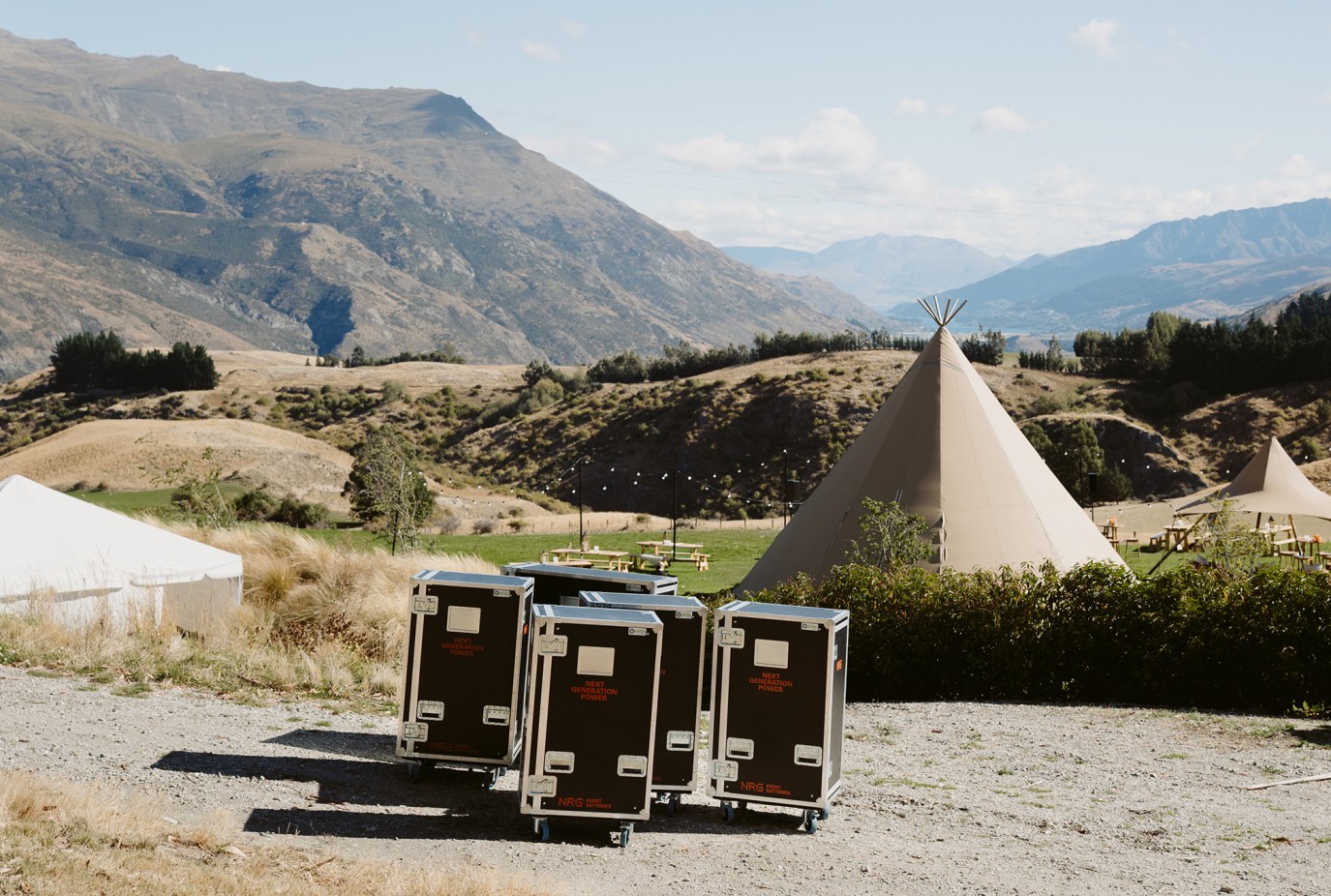
Born out of Queenstown’s events sector, a new battery system is changing how outdoor productions are powered - without the noise, fumes or fuel.
There’s a sound that follows almost every outdoor event - a low, persistent drone that hums beneath the music, the speeches, and the applause. It’s a diesel generator, and for decades it’s been as much a fixture of event production as the stage itself. A new Queenstown company is working to change that.
NRG Event Batteries is New Zealand’s first event-specific battery power solution, designed and built in Central Otago by industrial electricians and event technicians. It’s the work of Hamish Roberge, founder of TomTom Productions - one of the region’s most experienced event production and AV companies.
The idea grew from TomTom’s own efforts to understand and reduce the carbon footprint of event delivery. When the team mapped their emissions hotspots, diesel generation kept rising to the top.
“There’s a lot of sustainability talk in events, but meaningful change has to work in the real world,” Hamish says. “We built NRG to replace diesel at the source with a system that’s silent, clean, and engineered for show conditions - and it also makes event delivery more efficient to deploy.”
Off-the-shelf battery systems proved too large, too heavy, and too expensive for live production. So, the team started from scratch, engineering a modular, road-case system built around the specific demands of events - one that travels with existing production equipment and can be deployed via off-road access for remote venues.
The result delivers three-phase battery power recharged from New Zealand’s renewable electricity grid. The South Island grid runs at 95–98% renewable, drawing on hydro, wind and geothermal generation, meaning every event powered by NRG operates with zero onsite emissions and zero fossil fuel consumption during use. A diesel generator, by contrast, emits 2.68kg of CO₂ per litre burned - continuously, including during speeches, between sets and whenever demand drops low.
Beyond the emissions case, there’s a practical logic to the system. Power is supplied as required rather than running constantly, and the road-case format reduces the labour and logistics typically involved in moving temporary power into venues. Every deployment includes load analysis and real-time monitoring as standard, with onsite technician support available for larger events.
Queenstown is well-suited to be the birthplace of a solution like this. The district has become a testing ground for cleaner infrastructure across tourism, transport and events, and NRG draws directly from that energy - the product was inspired in part by TomTom’s involvement with Electrify Queenstown, the district’s annual clean energy event.
The team is planning a launch demonstration event for local industry partners in Queenstown.
NRG is now available for hire across the Lower South Island for weddings, conferences, film and screen productions, festivals, corporate activations and luxury events. Hybrid configurations and multiple units are available for large or multi-day events.
The company takes a transparent approach to sustainability, acknowledging battery manufacturing impacts while making a data-backed case for the lifetime environmental advantage of battery power over diesel. All environmental claims are sourced from published data provided by EECA, MBIE, and Transpower.
Queenstown has long been a place where practical innovation finds a natural home. NRG is the latest example - less a disruption than a logical next step for a district serious about protecting what makes it worth visiting.
Further information is available at nrgeventbatteries.co.nz.