Richard Kennett - Glenorchy search and rescue legend honoured
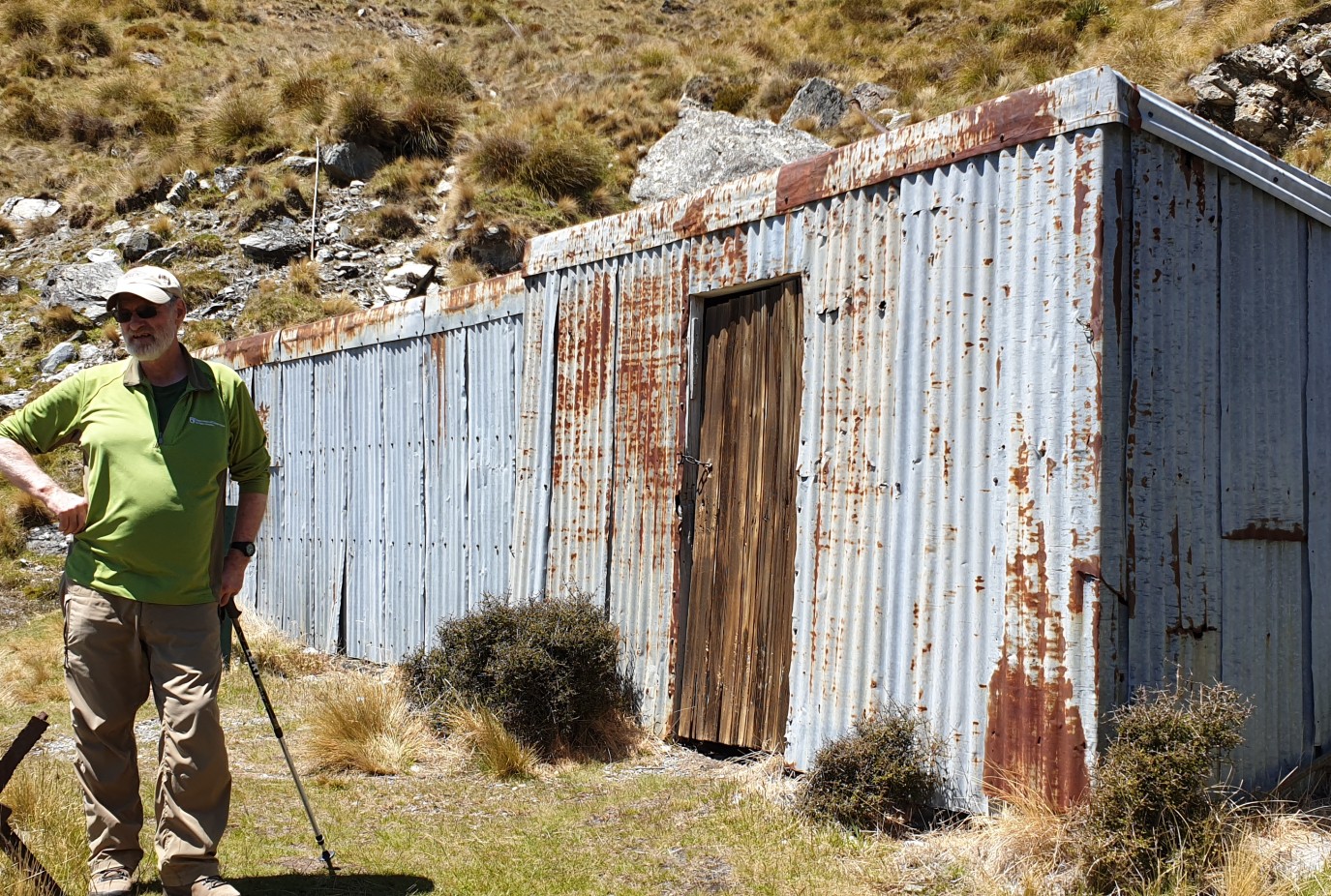
For more than 50 years he’s played a key role in Search and Rescue at the head of Lake Wakatipu, often in treacherous alpine terrain, with some 100 operations under his pack belt.
It’s Glenorchy’s Richard Kennett – a former National Park ranger-turned-local DOC manager, that they call on when someone’s in trouble, relying on his vast experience and knowledge of the park and its tracks, many of which he helped build decades ago.
Richard, 71, has also contributed greatly to conservation and heritage projects, going above and beyond the duties of his DOC role voluntarily to ensure the preservation of these important historic sites.
For all these efforts he was recently named a Member of the New Zealand Order of Merit for services to conservation and search and rescue in the New Year’s Honours list, something you won’t catch him boasting about.
It’s all part of giving back to the land and community he loves.
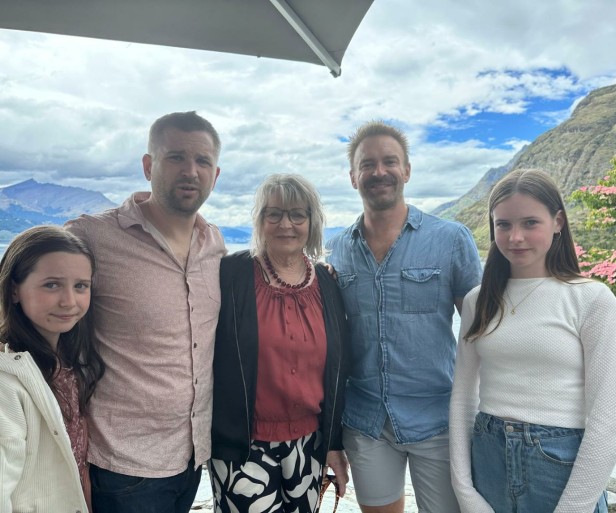
Glenorchy is “in the DNA” for the Kennett family: “My grandchildren are sixth generation in the Wakatipu,” he says. “This is my ancestral home.” Thomas Kennett was one of the first to mine the Invincible Gold Mine high above Rees Valley, his kids first day pupils at Glenorchy School in the 1890s.
Born in Ranfurly where his dad worked on farms, also at Waipiata, they then moved to North Otago, Richard attending Duntroon Primary and Waitaki Boys where he was a prefect, secondary schools cross country rep and earned a prestigious Duke of Edinburgh gold award.
“Then I headed to the hills as soon as possible,” he grins.
He started his career as a summer Mount Aspiring National Park assistant at Makarora for the National Parks Board and Lands and Survey Department in the early 1970s, converting deer trails into walking trails. “I also worked on ornithological surveys in the park’s northern area with Alexandra’s Peter Childs – an amazing man.”
Richard transferred to Glenorchy in January 1974, building bridges, huts and tracks during summer and hut warden on the Routeburn.
“That was when some people walked the Routeburn in jandals carrying duffel bags with sleepings bags wrapped around broomsticks, all that inappropriate stuff,” he grins.
It was here that Richard began his involvement with SAR, sadly not always able to return loved ones to their families. One of the worst of these he oversaw as field controller in the late 1980s - the Blue Duck plane crash at the head of the Dart Valley – a Wanaka pilot and a plane laden with passengers all gone. “That was one of the hardest, with multiple victims, mostly from overseas. It was a protracted rescue very high up in permanent snow during avalanche season.”
Then there was the miraculous rescue of an Israeli couple who’d fallen, landing on a tiny ledge where they were stranded for five days. Richard was at the Routeburn Falls Hut with workmate ‘Tussock’ whose keen eye spotted a mirror reflecting in the sun. This led to their helicopter rescue, ‘Tussock’ dropped in to winch them out.
“We named Israeli Creek after them.”
In 1977 Richard volunteered to do weed control and bird surveys on remote Raoul Island, part of the Kermadec Islands, halfway between NZ and Tonga – a live volcano with an active crater lake. “They were looking for fit, young rangers, not frightened to do the hard yards. It was smoking, shaking and trembling but we were young, and it was an adventure for a few months.”
Based in Invercargill for four years, work included forming the Mavora Walkway and being a member of the first expedition to Codfish Island (Whenau Hou) trapping and relocating weka ready for kakapo release.
Back in Glenorchy, Richard and a colleague also rode supplies into the Greenstone-Caples Huts on packhorses, and assisted Arcadia’s Lloyd Veint with cattle drives into Cattle Flat in the Dart while ‘packing’ in chainsaws and track gear.
A Glenorchy Rural Fire Force volunteer and an original Glenorchy first ambulance responder for 15 to 20 years, Richard has seen some “big burns”, including on the Remarkables, at Closeburn and in the Greenstone Valley caused by a lightning strike.
“Floods on Race Day 1994 also blew out every bridge this side of the Routeburn and the Army came in to assist with track and bridge rebuilds.”
Richard oversaw the helicopter evacuation of large numbers of people then, also during the 1999 floods.
He’s done his time on the Glenorchy Community Association, Glenorchy School board and been a local JP for about 25 years.
Made a Life Member of Wakatipu SAR in 2020, Richard’s stepped back but his expertise is still called on, most recently in December helping rescue two young Germans stranded in the Rock Burn.
“If Fookesy (Senior Sergeant John Fookes) needs me, he gives me a call.”
Now DOC Wakatipu’s principal ranger – heritage and visitor assets, Richard manages 400kms of tracks and heritage sites, and he’s not retiring yet: “There’s still a few jobs to do,” he grins. “Besides I’m blessed to work and live in the most beautiful part of the country with a great community and colleagues.”
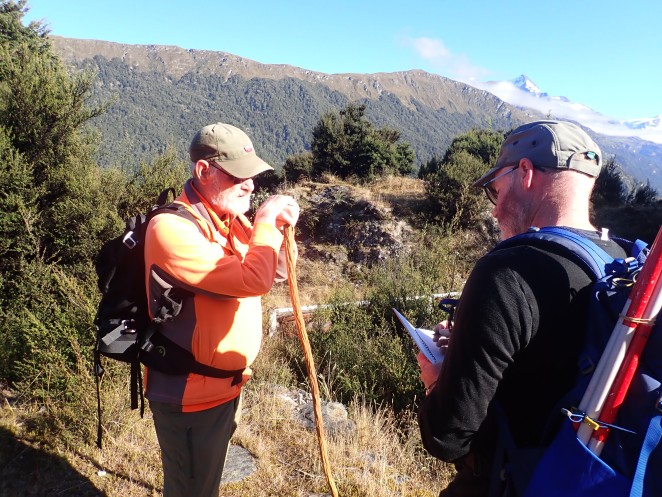
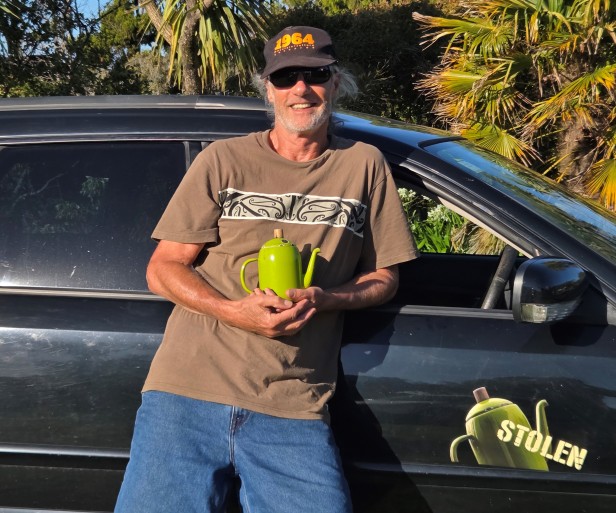
Richard, left, still on the job in his beloved Wakatipu
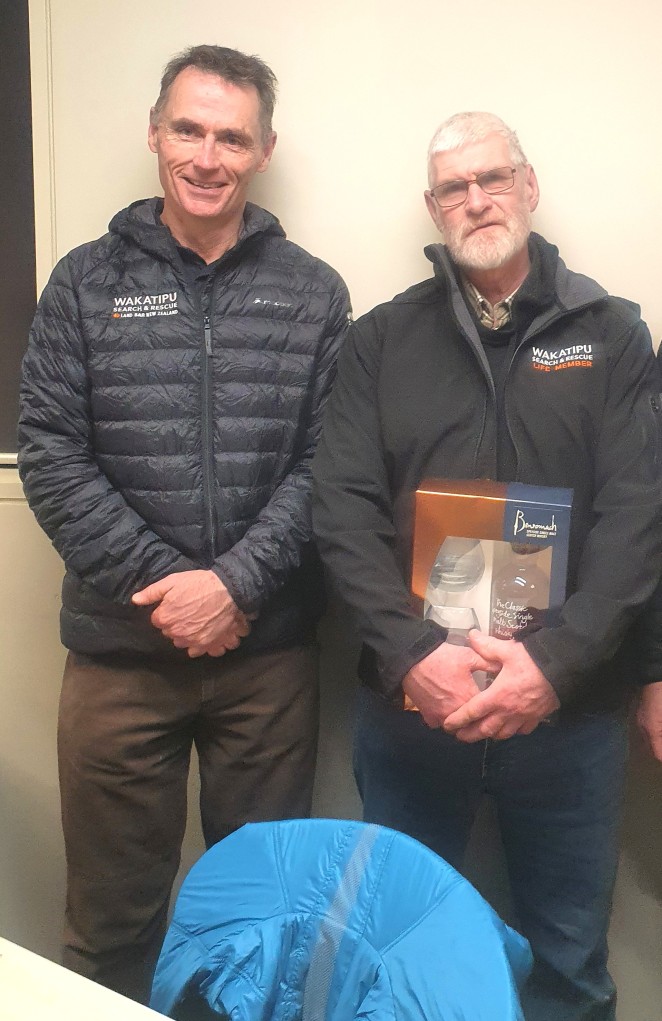
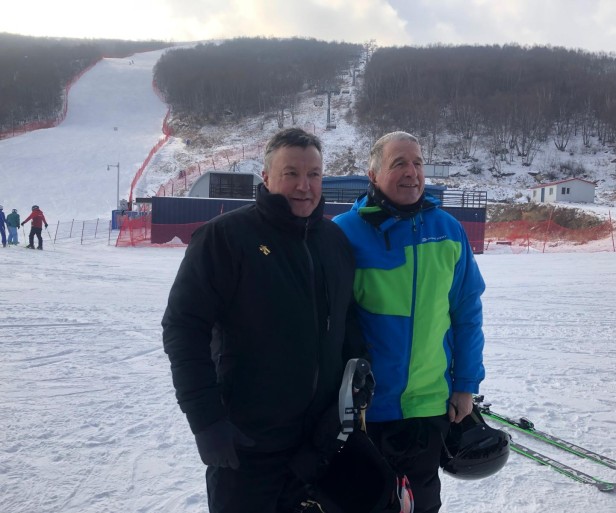
Richard, right, after receiving his Wakatipu Search and Rescue Life Membership in 2019, with local Police SAR Senior Sergeant John Fookes