Queenstown Cable Car Referral Application Released as Part of Fast-track Process
Southern Infrastructure Limited welcomes the early release of the referral application documents for the Queenstown Cable Car (QCC) on the Government’s Fast-track Approvals website ahead of a formal referral decision being made, and sees it as an opportunity for the community to engage with the project as it progresses toward the substantive application stage.
“The referral is the first step toward securing the legislative approvals required to construct and operate the network. There’s plenty more to come - but today, we pause to acknowledge the work, the people, and the shared belief that Queenstown can lead with innovation, sustainability and community at its heart.” commented Jenna Adamson, Southern Infrastructure Director, when Southern Infrastructure first lodged its referral application in October 2025.
What a referral means - and what comes next
A referral allows the Minister to determine whether a project is suitable to proceed to a full substantive assessment under the Fast-track Approvals legislation. It is not a final decision on the project.
If referred, the project would move to a detailed consideration phase by an expert consenting panel. This would include further technical assessment by Southern Infrastructure and its consultants, alongside input from councils, statutory authorities, iwi and affected landowners.
A decision on referral is anticipated in the coming weeks.
The majority of the referral documents are already in the public domain, and the full application has been shared early with key stakeholders including Queenstown Lakes District Council, Otago Regional Council, Waka Kotahi NZ Transport Agency, Ngāi Tahu, the Department of Conservation, Queenstown Airport Corporation and others, and more recently through Southern Infrastructure’s Queenstown Cable Car website. Additional material associated with the referral will be released once the decision is made.
Since lodging the referral application, the project has continued to progress, as would be expected for a large and complex infrastructure proposal. Ongoing technical work has clarified several key design priorities, including a strong focus on supporting access to the SH6 growth area around Frankton North and Five Mile.
Progress has also been made on technical solutions with Transpower, enabling refinement of the indicative network, including confirmation of a preferred route along State Highway 6 with a station located at the Queenstown Central precinct. These refinements will be formally incorporated and assessed as part of the substantive application, alongside continued engagement with stakeholders and landowners.
Southern Infrastructure Chief Executive Ross Copland said feedback received to date has been valuable and will help inform the next phase of work, including detailed design, environmental assessment, landowner agreements and integration with the wider transport network.
“The Fast-track Approvals Act 2024 is a new piece of planning legislation, and there is understandably a learning curve for everyone involved. We’re seeing strong engagement from stakeholders and welcome the feedback being shared. Some of the questions raised are important and will be addressed in detail as the project moves forward.”
Addressing Queenstown’s transport and access challenges
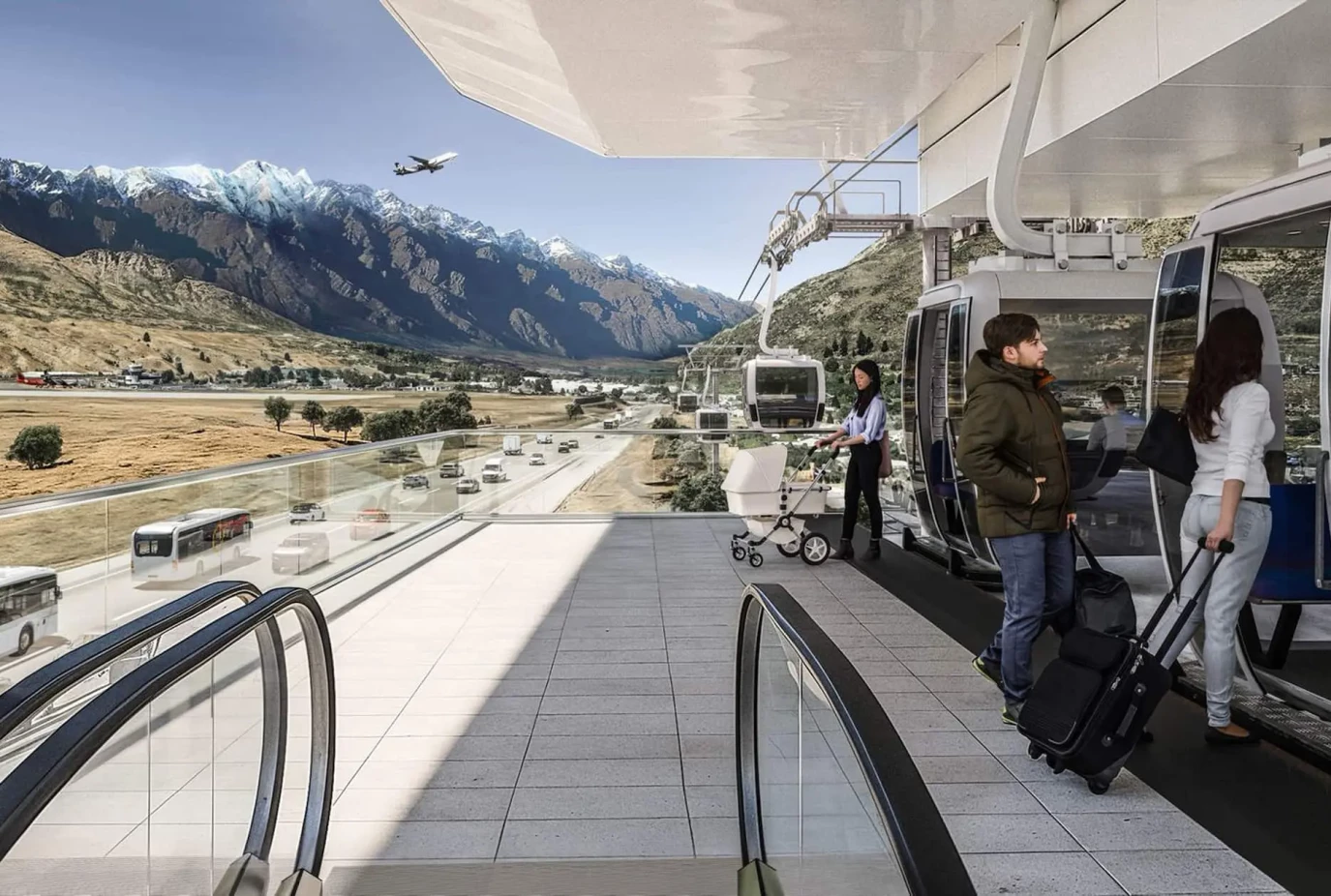
The Queenstown Cable Car is as a fully electric, high-capacity public transport system connecting the town centre with Queenstown Airport, Frankton and Ladies Mile.
Queenstown’s core centres are currently connected by a single constrained corridor, with congestion and unpredictable travel times along SH6A and SH6 affecting daily life, access to jobs and services, and the ability to deliver housing.
The QCC will provide a reliable, off-road alternative that is independent of the road network, operating in all weather conditions and maintaining consistent travel times during peak periods, incidents or weather events.
Part of an integrated transport network
Southern Infrastructure Chief Executive Ross Copland emphasised that bus transport will still play an essential role in Queenstown's integrated, multi-modal public transport system.
“The cable car is designed to complement existing and future transport modes - including public and tourist bus services, autonomous vehicles, park-and-ride, active travel and ferry connections. The cable car offers high frequency, high capacity links between the busiest transport nodes, much like the function of passenger rail in our bigger cities. Naturally the bus network will evolve to provide a mix of distribution and feeder services to utilise the capacity of the rapid-transit network as it expands. We are working hard to ensure that all modes are well integrated, consistent with transport planning best practice”.
The network is designed to enable smooth transfers between transport modes and provide flexibility to extend or connect to other corridors over time. The national ticketing system Motu Move is seen as a key enabler of this by allowing easy movement between modes on a single ticketing platform allowing tap-and-go payments, weekly maximums and discounts for certain groups. Initially the focus is building transport hubs in high growth areas identified in the Queenstown Spatial Plan.
Commitment to landowners, environment and collaboration
Southern Infrastructure said landowners remain central to the project, with ongoing individual engagement and a commitment to a respectful, open process.
Protecting Queenstown’s natural landscape has also been a core priority, with route design focused on avoiding sensitive areas where possible, minimising visual impact, and restoring construction areas through replanting and ecological rehabilitation.
Investment and national significance
Southern Infrastructure has committed significant private risk capital to progress the project, including technical studies, planning, route assessment, specialist reporting and preparation of the Fast-track referral application.
The company has also lodged its Stage 2 Infrastructure Priorities Programme submission, reflecting the project’s potential contribution to regional productivity, resilience, low-emissions transport and long-term community outcomes.
“Nearly every infrastructure network in Queenstown is reaching capacity at the same time,” said Mr Copland. “A step-change is urgently needed. Southern Infrastructure exists to help unlock transformational projects faster, with less impact on the community and at lower cost, while working collaboratively with public partners, iwi, landowners and stakeholders.”
Backed by venture philanthropist Rod Drury, Southern Infrastructure is advancing the Queenstown Cable Car alongside the proposed Southern Lakes Secondary Hospital as part of a wider programme to address the region’s most pressing infrastructure challenges.
“We’ve rolled our sleeves up and done the work,” Mr Drury said. “This project has the potential to solve local transport challenges, enhance the visitor experience, and demonstrate a new way of delivering essential infrastructure in New Zealand.”