Qantas engine fire – Are we ready?
While there was widespread alarm both on the ground and on board as significant flames leapt from the engine of a Qantas jet upon take-off from Queenstown last Saturday (5 September), Qantas assures its pilots had everything under control.
The Sydney-bound plane diverted to Christchurch and landed safely, the flames soon extinguished, and a Qantas spokesperson says the pilot had only called for a ‘priority landing’ not an ‘emergency landing’.
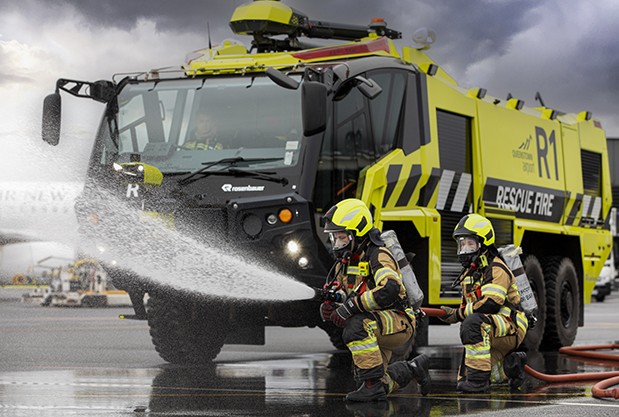
However, had an emergency landing been required, Queenstown Airport’s 22-strong, highly trained and well-equipped Airport Emergency Services crew are well-equipped in aviation rescue and firefighting with state-of-the-art technology, and always at the ready, Queenstown Airport Chief of Aviation and Customer Todd Grace says.
A full crew is rostered on over three watches.
Grace says the airport is “fully compliant” with all international requirements and takes emergency preparedness “very seriously” and is well-prepared to respond effectively.
The airport’s Emergency Services personnel also carry out important safety checks, including regular runway inspections, and act as first responders to medical incidents at the airport. “They also help manage wildlife and play a key role in emergency planning and exercises.”
Outside of work many of them also serve the community as volunteer firefighters in local brigades.
Grace says Queenstown Airport also regularly reviews and updates its Aerodrome Emergency Plan with staff receiving coordinated incident management system (CIMS) training and undergoing regular desktop exercises and simulated emergencies.
Grace says the 5 September Qantas diversion to Christchurch decision was made by the flight crew following a suspected engine issue. “Qantas has engineering and ground support in place in Christchurch. The aircraft did not make an emergency landing.”
Meanwhile, a Qantas spokesperson says Qantas engineers flew into Christchurch to inspect the plane on Sunday (6 September) after what it had termed as “a suspected engine issue”. Just what that was had not been established late last week.
“The aircraft did not make an emergency landing. The crew requested priority handling on arrival in Christchurch as a precaution, which is standard practice when pilots wish to have access to additional support services,” an airline spokesperson says, while conceding it was a distressing experience for passengers.
Aviation sources say Invercargill and Christchurch have longer runways not surrounded by mountains and with the plane fully laden with fuel the pilot and crew would’ve elected to divert to Christchurch where there were good resources on the ground.
While Qantas still hasn’t released the findings of its investigations, a Queenstown Airport spokesperson says there was no evidence of a bird strike on the runway.
The following day (Sunday, 6 September) a Qantas flight from Sydney to Queenstown returned to Sydney after a flight deck alert indicated a potential issue with the aircraft’s skid system, the spokesperson says.
The aircraft landed safely back in Sydney.