Driving change: Inside Queenstown Golf Club’s energy revolution
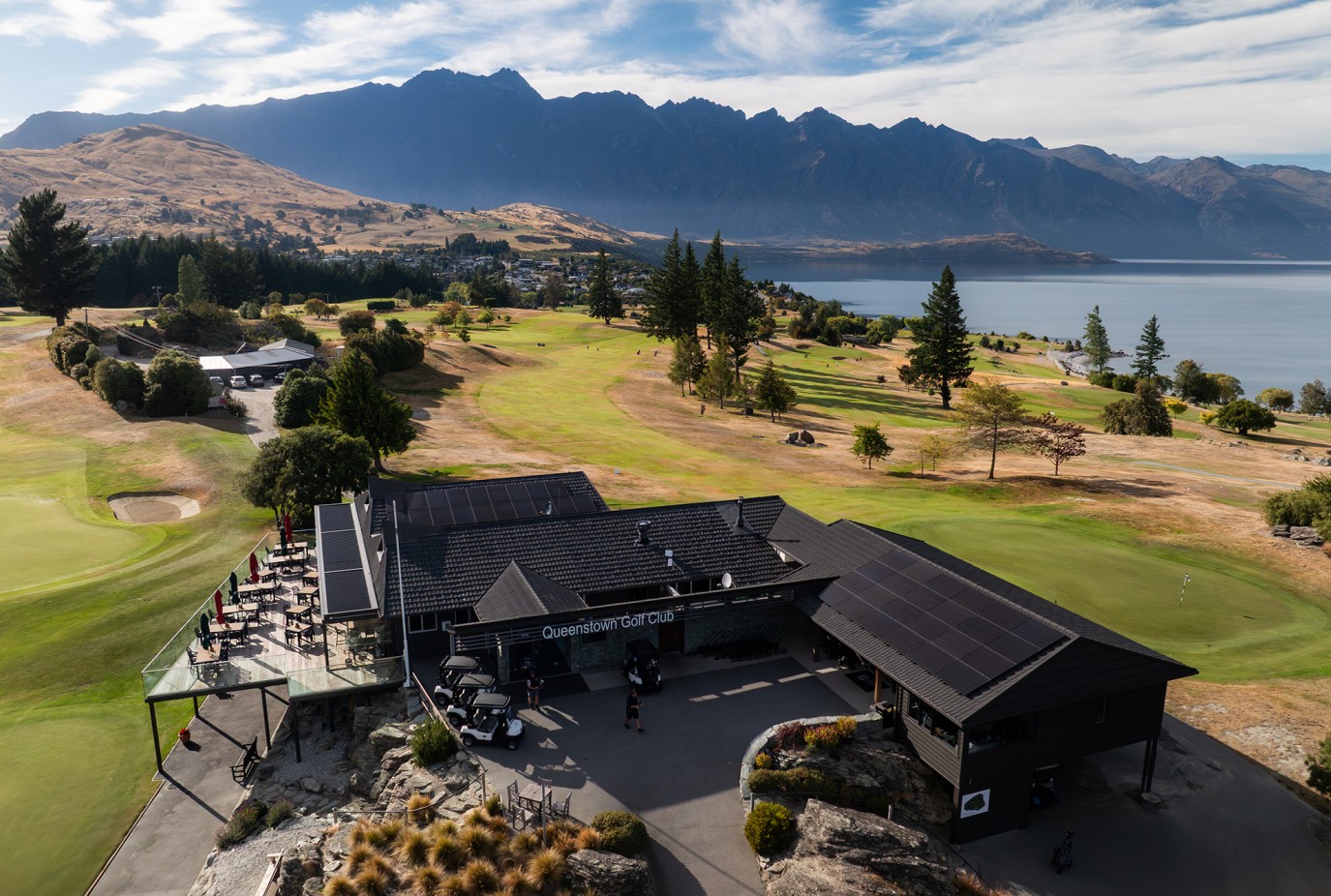
Earlier this season, the 111-year-old club switched on a new solar system - 80 rooftop panels paired with 42 kilowatt-hours of battery storage - transforming the clubhouse into a largely self-powered facility during daylight hours.
On most days, from around 8.30am until early evening, the café, kitchen, bar, golf cart charging stations and pro shop operate almost entirely off solar energy.
But the move wasn’t just about lowering electricity bills or responding to climate change.
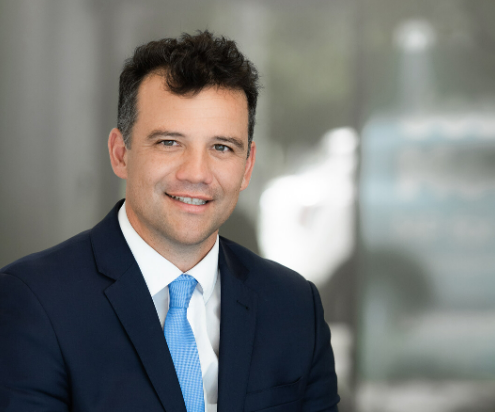
Club general manager Andrew Bell says resilience played a major role in the decision.
“Queenstown Golf Club is designated as a community shelter hub under the civil defence plan,” he explains. “If a disaster cut off the Kelvin Peninsula, people would naturally come here for shelter.
“But until recently we had no capacity to operate independently of the grid, so we had a discussion about how we would meet the needs of the community.”
Bell was in Christchurch for the earthquakes and saw how important the simple things are.
“People needed communication, shelter, warmth, lighting, food,” he says, “especially if something were to happen during winter. We can provide that now.
“In an emergency, we’ll have enough energy stored to help for several days. And, of course, the sun comes out every morning to recharge the batteries.”
The solar installation was completed by local company Queenstown Solar in October. On a typical day, the clubhouse uses around 18 kilowatts per hour while the system produces about 30. Excess power charges the battery bank, enabling the club to keep the heating, lights, and chillers on in an emergency, and locals to charge their phones. Community Trust South stepped in with some partial grant funding for the battery installation, as it upgrades the resilience of the community shelter hub.
Financially, the investment required some long-term thinking. Bell estimates the payback period at six to eight years - but with panels expected to last around three decades, the economics eventually stack up.
“Upfront cost is what puts people off,” he says. “But over 30 years it absolutely makes sense.”
A broader sustainability shift
Solar power is just one part of a broader environmental transition that has been reshaping the club over the past decade.
Golf courses worldwide have been reassessing their environmental impact, Bell says, moving away from heavy chemical use and towards smarter technology and land management.
“People assume golf courses are environmental polluters,” he says. “But the industry has actually moved a long way in the opposite direction.”
At Queenstown Golf Club, chemical use has dropped dramatically thanks to aeration and air-injection systems that improve soil structure and allow grass roots to grow deeper naturally, reducing the need for fertilisers and herbicides.
Two years ago, the club removed more than 400 wilding pines and other trees that were competing with turf growth and consuming large amounts of water. In their place, more than 1,000 native trees were planted around the course boundaries.
“It improved the health of the course while actually increasing the number of trees on site,” Bell says. “The natives will grow and provide carbon benefits long term.”
The club has also begun electrifying its maintenance fleet, including lithium-powered greens mowers that cut emissions and significantly reduce noise for neighbouring residents.
Single-use plastics have been tackled as well. Drinking fountains with UV-filtered water allow players to refill bottles with still, sparkling or chilled water free of charge, removing the need for large volumes of bottled water.
Driving many of these initiatives is a growing culture of environmental awareness within the club itself. Staff member Chloe Hickey has helped bring new sustainability ideas to the board through research and project development.
Next on the horizon could be robotics, with autonomous mowers and range equipment already being trialled internationally to improve efficiency and free up staff to focus on course quality.
As the club prepares to celebrate its 111th anniversary this May and 51 years on its 58-hectares site on Kelvin Heights peninsula, Bell says the goal remains simple.
“If we can run this place more efficiently, protect the environment and still give people a great place to play golf - that’s a win for everyone.”