DOC visit to see the incredible mahi
Takahē could once again be roaming in the Rees Valley in Queenstown Lakes before the end of next year.
The flightless bird is a conservation icon in New Zealand, having been incorrectly labelled extinct three times.
Their potential return to the Rees catchment, with a potential release planned for late 2024, is being made possible by the work of the Southern Lakes Sanctuary.
The landscape scale conservation project brings together six founding partners and 87 volunteer community groups, focused on predator trapping and monitoring.
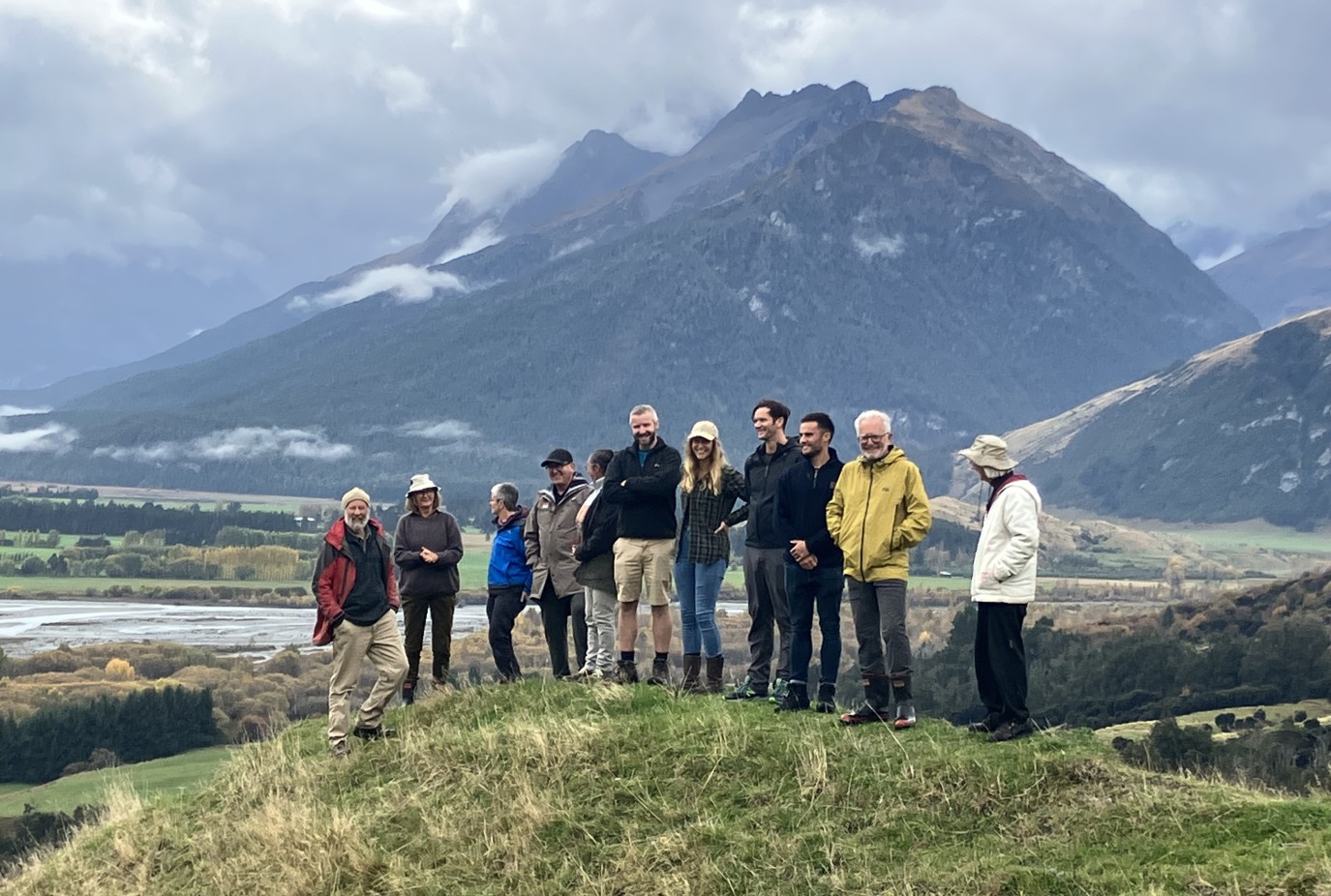
Earlier this month, Department of Conservation Director General Penny Nelson, her deputy Mike Tully and DOC South Island operation director Aaron Fleming visited to learn more about the ambitious mahi (work) being done in the region.
They were joined by staff from the Southern Lakes Sanctuary (SLS), along with Mark and Amanda Hasselman, of Temple Peak Station, and Kate and Iris Scott, of Rees Valley Station.
“We took them up to the Rees Valley because it’s a beautiful story up there about what is possible through collaboration,” SLS project director Paul Kavanagh says.
“We’ve got community groups, such as the Routeburn Dart Wildlife Trust, and landowners up there, high country farmers, who are just so engaged and really want to do what’s best for the biodiversity and the whenua (land).
“We wanted to showcase some of our mahi up there and show what’s possible, because we’re in really serious discussions about a potential Takahē release in the Rees Valley in August 2024.
“This is all possible from the hard work of predominantly volunteers on the ground, our team providing cohesion, and the landowners, who have been doing amazing conservations practices for generations and care about every bit of the land.”
DOC plans to release up to 60 Takahē into the Greenstone Valley later this year, supported by SLS.
“The Rees is a much bigger site but we’ve got a bit of work to do before a release, a huge number of trap installations.”
There are now about 10,500 traps throughout Queenstown Lakes, up from around 6400 in 2017.
DOC, as a Jobs for Nature/ Mahi mō te Taiao funder of the Southern Lakes Sanctuary, is a key partner in Southern Lakes conservation work.
Kavanagh says that funding for the team of 20 runs until June 2024.
“The Takahē release would fall outside our current funding stream, so we’re working really hard to secure long term funding.
“We’ve come a long, long way, but those gains will be quickly lost if our work doesn’t continue. Our staff are incredible, a lot of them have Masters degrees, they’re really experienced and passionate, so we want to ensure they have security in their jobs.”